Why You Can't Relax Even When You Have Free Time
Quick note: This article contains affiliate links, which means I may earn a small commission if you purchase through them, at no extra cost to you. I only recommend products I've researched and genuinely believe can help. Your trust matters more than any commission. As an Amazon Associate, I earn from qualifying purchases.
You finally have time to yourself. No work. No obligations. No one asking anything from you. Just free time to rest. So why does your body refuse to relax?

You sit down. You try to breathe. You tell yourself to just... be still.
But your mind is already somewhere else. Planning tomorrow. Replaying yesterday. Thinking about everything you should be doing instead of sitting here.
Your body is tense. Your jaw is clenched. Your shoulders are up near your ears. You're sitting still, but you're not relaxed. If anything, trying to relax is making you more anxious.
This isn't laziness. It's not lack of discipline. Your nervous system is stuck in a pattern where rest feels dangerous - and until you understand why, you can't override it.
Why Your Body Won't Let You Relax
Most people think relaxation is the absence of stress. You remove the stressful thing, and your body automatically calms down. That's not how it works.
Relaxation is an active state your nervous system has to shift into. And if your nervous system has been running in high gear for weeks, months, or years, it doesn't know how to downshift anymore.
Your Nervous System Is Stuck in "On" Mode
When you're stressed, your sympathetic nervous system activates. This is the part responsible for alertness, action, and survival. It's supposed to turn on when you need it - during a work deadline, a difficult conversation, an emergency - and then turn off when the threat passes.
But when stress is constant, your sympathetic nervous system never fully turns off. It becomes your baseline. Even when you have free time, your body stays in a state of low-level activation. You're wired but tired. Alert but exhausted. Your body is running stress hormones even though there's nothing stressful happening right now.
And when you try to relax, your nervous system interprets it as a threat. If I relax, something bad might happen. I need to stay ready. So it keeps you vigilant. Tense. On guard.
Rest Feels Unsafe
This sounds dramatic, but it's what's happening beneath the surface.
If you've spent months or years in survival mode - managing chronic stress, pushing through exhaustion, never fully resting - your nervous system has learned that rest is dangerous.
Rest means letting your guard down. And letting your guard down means you might miss something important, forget something critical, or fail to prepare for the next threat.
So even when you consciously want to relax, your subconscious won't let you. Your brain keeps generating anxious thoughts to pull you back into vigilance. Your body stays tense to keep you ready. And the harder you try to force relaxation, the more your nervous system resists.
You've Forgotten How to Do Nothing
Most people are constantly doing something. Working. Scrolling. Planning. Thinking. Moving.
Even when you're "relaxing," you're probably still engaging with something - a show, your phone, a conversation. True rest - the kind where you're not consuming, producing, or processing anything - feels uncomfortable because you're not used to it.
Your brain doesn't know what to do with empty space. So it fills it. With thoughts. With worries. With the urge to check your phone or get up and do something productive. You've trained yourself to always be in motion. And now when you try to stop, it feels wrong.
What It Actually Feels Like
- Physical restlessness. You can't sit still. You fidget. You shift positions constantly. You feel like you need to move.
- Mental spinning. Your mind won't stop. You're replaying the day, planning tomorrow, or thinking about random things that don't matter but feel urgent.
- Guilt. You feel like you're wasting time. Like you should be doing something productive instead of just sitting here.
- Inability to enjoy it. Even when you're doing something that's supposed to be relaxing - watching a movie, taking a bath, sitting outside - you can't fully sink into it. Part of you is still somewhere else.
- Irritability. You're frustrated with yourself for not being able to relax. Or frustrated with other people for interrupting your attempt to rest.
If this is your pattern, your nervous system isn't broken. It's just stuck. And it needs help shifting out of the mode it's been running in for too long.
How to Actually Relax When Your Body Won't Let You
Give Yourself Permission to Rest Without Producing Anything
This is the hardest one, but it's also the most important. You don't need to earn rest. You don't need to be productive first. You don't need to justify taking time to do nothing.
If you can't give yourself permission to rest without guilt, your nervous system will never fully relax. Part of you will always be monitoring whether you've "done enough" to deserve it. Set a timer if you need to. Tell yourself: For the next 20 minutes, I'm allowed to do nothing. This is the task.
Use a Timer to Create Boundaries Around Rest
One reason people can't relax is because rest feels endless. If I start relaxing, when will I stop? What if I waste the whole day?
A timer solves this. Set it for 10 minutes. 20 minutes. Whatever feels manageable. During that time, your only job is to rest. When the timer goes off, you're done.
The Taylor Multi-Alert Timer is perfect for this because it has sound, light, and vibration options. You can set it to vibrate quietly if you don't want a loud alarm disrupting your rest. Get the Taylor Timer on Amazon →
Try Yoga Nidra - Deep Rest Without Having to "Do" Meditation
If traditional meditation feels impossible because your mind won't stop, Yoga Nidra is a better option. It's a guided practice that takes you into deep rest while you're fully conscious.
The Yoga Nidra: Deep Rest and Renewal course from Mindful teaches you how to access deep relaxation even when your nervous system is stuck in overdrive. Try the Yoga Nidra Course →
Use Passive Relaxation Tools
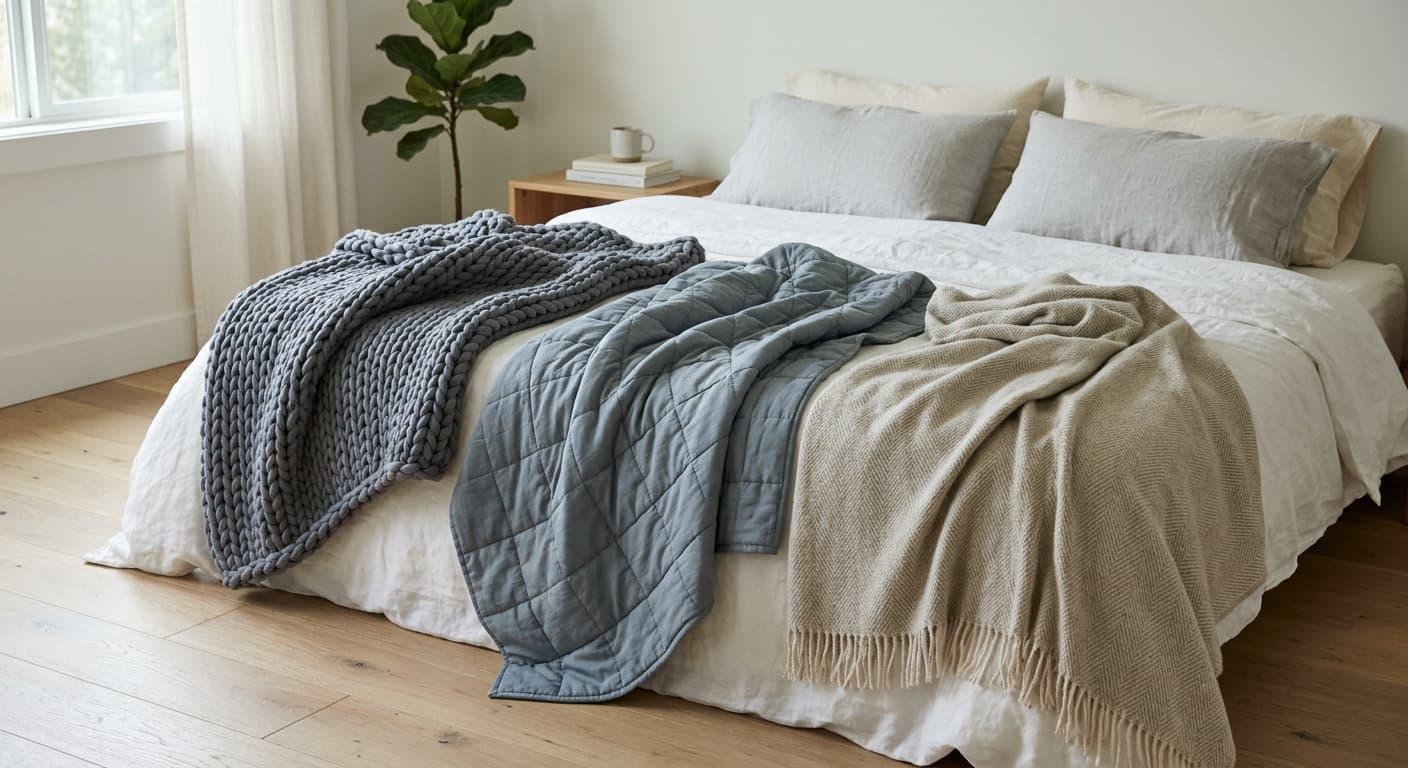
Sometimes the problem isn't that you don't want to relax. It's that you don't know how. Passive relaxation tools do the work for you.
A weighted blanket provides deep pressure that activates your parasympathetic nervous system. Check out Weighted Blankets →
An acupressure mat forces your nervous system to focus on intense physical sensation. The spikes are uncomfortable enough that your brain has to pay attention to them. That breaks the mental loop of anxious thoughts and redirects your focus to something physical and immediate. Read our guide on the Best Acupressure Mats →
Create a Physical Ritual That Signals "Rest Time"
Your nervous system responds to cues. If you create a consistent ritual around rest, your body will start to recognize it and respond more easily over time.
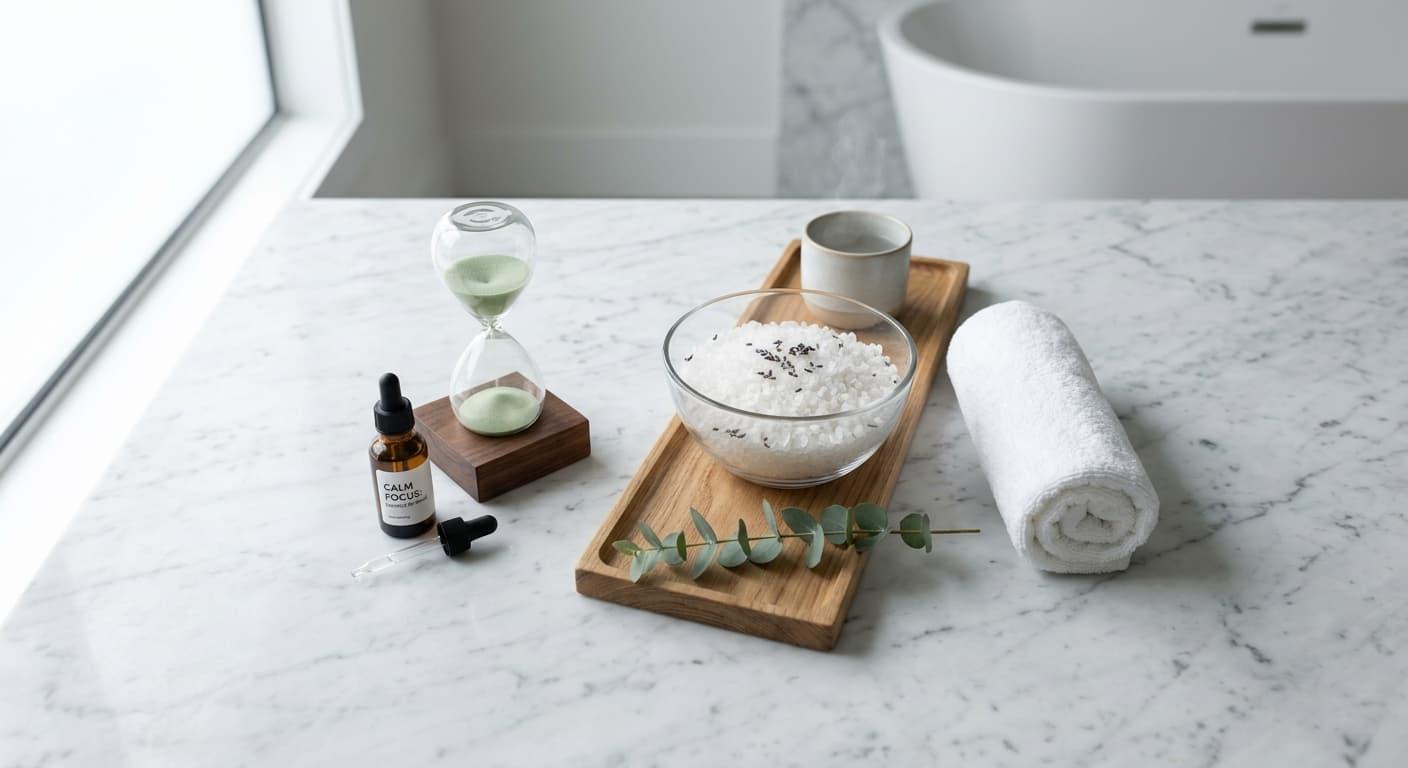
A 20-minute Epsom salt bath is one of the simplest rituals. The magnesium in the salt absorbs through your skin and supports nervous system regulation. Dr Teal's Lavender Epsom Salt is inexpensive, easy to find, and the lavender scent adds a calming sensory cue. Get Dr Teal's Lavender Epsom Salt →
Lower Your Baseline Stress So Relaxation Is Easier
If your baseline stress is high, everything is harder. Including rest. Magnesium helps regulate your stress response and supports the shift from sympathetic (fight-or-flight) to parasympathetic (rest-and-digest) mode.
When you take it consistently, your nervous system doesn't run as hot. You're not starting from a place of chronic activation every time you try to relax. Try Magnesium Breakthrough →
Accept That Relaxation Is a Skill You Have to Rebuild
You didn't lose the ability to relax overnight. And you won't regain it overnight. If you've been running on stress for months or years, your nervous system needs time to relearn that rest is safe.
It's going to feel uncomfortable at first. Your brain is going to resist. Your body is going to feel restless. That's normal. You're not doing it wrong.
If you can't relax even when you have free time, you're not lazy. You're not defective. You're not doing it wrong. Your nervous system has been running in survival mode for too long, and it doesn't know how to stop. But it can learn. With the right tools, the right rituals, and the right support, you can retrain your body to recognize that rest is safe.
Reflections & Thoughts
No thoughts shared yet. Be the first to join the conversation.