Best Sunrise Alarm Clocks for Anxiety & Sleep (Compared)
Quick note: This article contains affiliate links, which means I may earn a small commission if you purchase through them, at no extra cost to you. I only recommend products I've researched and genuinely believe can help. Your trust matters more than any commission. As an Amazon Associate, I earn from qualifying purchases.
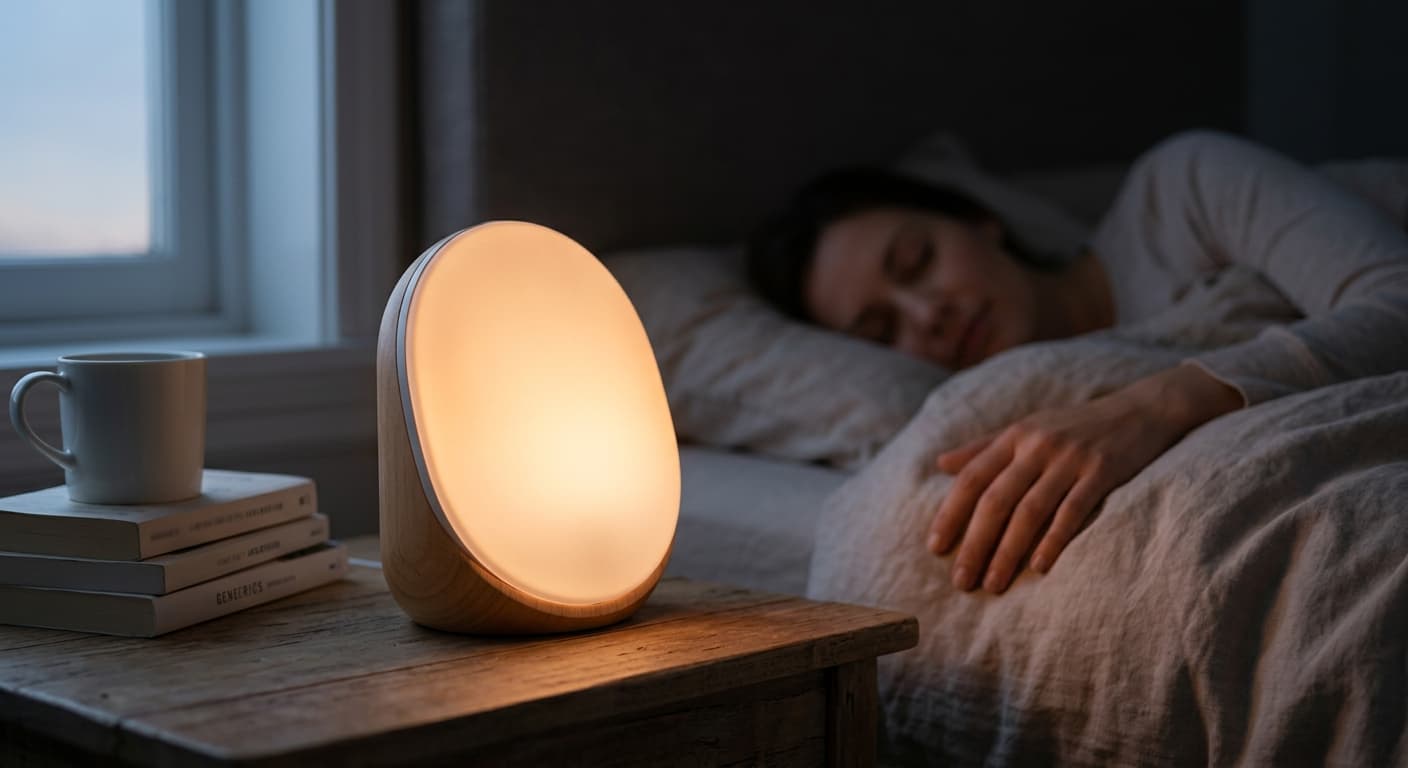
There are few worse ways to start a day than being ripped out of sleep by a blaring alarm. Your heart rate spikes. Your nervous system jolts into fight-or-flight. And if you're already managing anxiety, that jarring start sets a tone for the rest of your morning that's genuinely difficult to recover from.
Sunrise alarm clocks solve this differently. Instead of a sudden noise, they begin brightening your room 20-30 minutes before your wake time, gradually simulating a natural sunrise. Your body responds to the increasing light the same way it would to an actual sunrise - cortisol rises gently, melatonin fades, and you move through lighter sleep stages naturally before the alarm sounds. You wake up already halfway there, rather than shocked awake from deep sleep.
The result isn't just a more pleasant morning. It's a fundamentally different physiological wake-up - one that works with your nervous system rather than against it. For people managing anxiety, this difference in how the day begins compounds across weeks and months.
The problem is that Amazon is full of sunrise alarm clocks ranging from $33 to $300. Some do the job simply. Some double as white noise machines, night lights, and smart home hubs. Some require a monthly subscription. Understanding what you actually need - and what's just marketing - makes this a much easier decision than the product listings suggest.
How Sunrise Alarm Clocks Actually Work
The mechanism behind sunrise alarm clocks is rooted in how your body naturally wakes up when sleeping in alignment with daylight.
Your body's master clock - the suprachiasmatic nucleus in your brain - is exquisitely sensitive to light. When light hits your retinas in the morning, it triggers a cascade of responses: melatonin production slows, cortisol begins rising (in a controlled, healthy way called the cortisol awakening response), and your body temperature starts climbing. These are the signals that move you from deep sleep toward lighter sleep stages and eventually wakefulness.
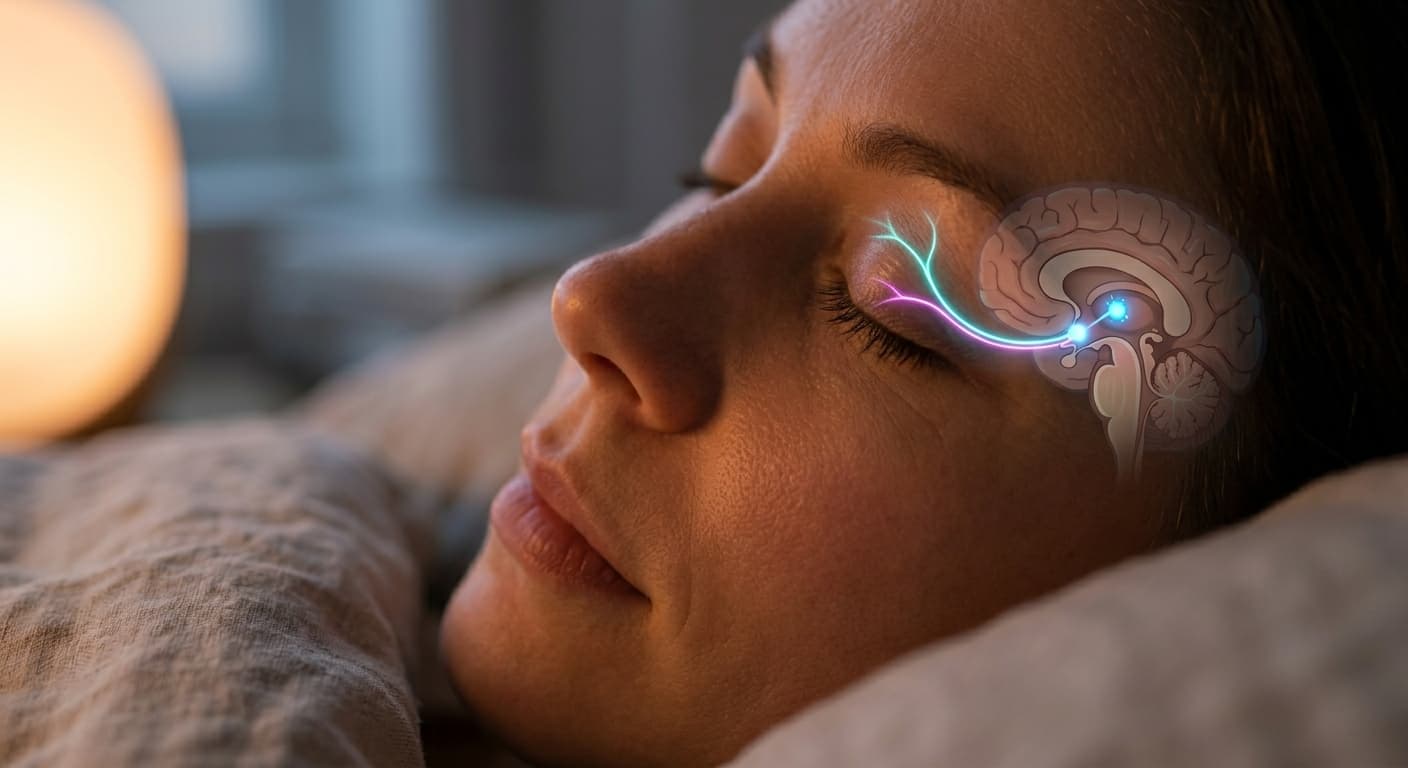
A sunrise alarm clock replicates this by gradually increasing light intensity in your room 20-30 minutes before your set alarm time. Your closed eyelids transmit enough light to trigger this biological response even while you're still asleep. By the time the alarm sounds - or even before it - your body has already begun its natural waking process. You surface from sleep rather than being yanked out of it.
For anxiety specifically, this matters in two ways. First, it eliminates the cortisol spike from a jarring alarm - a spike that is indistinguishable to your nervous system from a threat response, and that primes your body for anxiety rather than calm. Second, consistent morning light exposure anchors your circadian rhythm, which directly improves sleep quality at night - creating a positive cycle where better sleep reduces anxiety, and reduced anxiety improves sleep.
Features That Actually Matter (And What's Just Marketing)
Before choosing a sunrise alarm clock, understand which features make a genuine difference and which ones are nice-to-have extras.
Sunrise simulation duration. Most clocks offer 10, 20, or 30 minutes of gradual brightening before the alarm. Thirty minutes is ideal - it gives your body maximum time to transition naturally. Shorter durations compress the gradual rise and deliver a less natural experience. Look for adjustable duration so you can customize it.
Maximum brightness (lux output). This is rarely listed clearly on Amazon, but it matters. A sunrise simulation needs to reach at least 200 lux to reliably trigger the cortisol awakening response. Premium clocks (Philips SmartSleep) reach 300 lux or higher. Budget clocks often don't publish their lux output - which is why the Philips clinical credibility claim carries weight.
Sound machine integration. Several clocks on this list also function as white noise machines with nature sounds. This is genuinely useful - it means one bedside device handles both your sleep environment (sound) and your wake-up (light), rather than two separate devices.
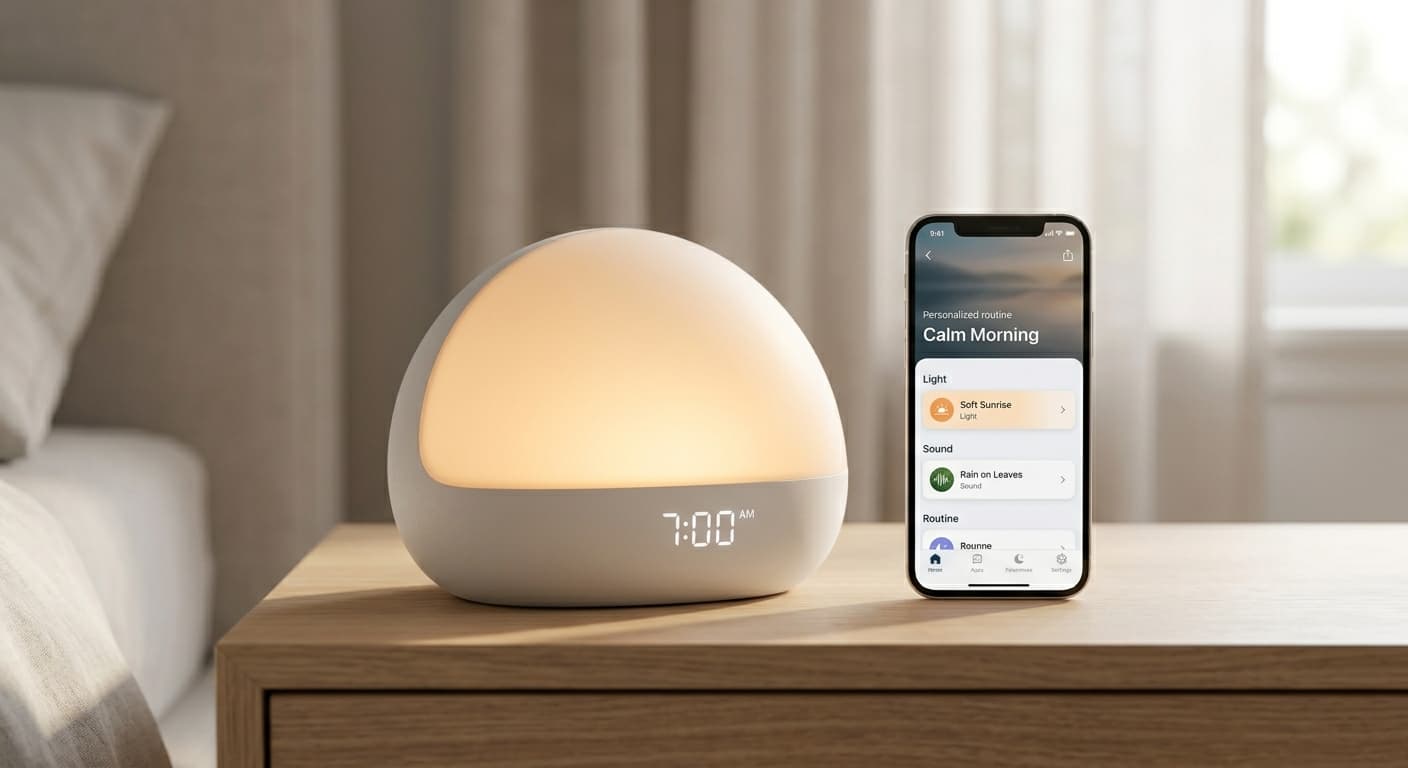
Smart/app control vs. standalone. App-controlled clocks (Hatch Restore 3) give you more customization and a growing library of sleep content. Standalone clocks (all others on this list) are simpler, don't require Wi-Fi, and work without a subscription. Choose based on how much you want to manage from your phone - many people specifically don't want their phone involved in their bedroom.
Subscription requirements. The Hatch Restore 3 requires a $4.99/month subscription after a 30-day free trial for full content access. This is important to know before you buy. The hardware works without the subscription, but the content library that makes it valuable is subscription-gated.
Color options. Multiple color lights are a feature on most budget clocks. These function as mood lights and night lights - pleasant but not directly related to sleep improvement. Don't pay significantly more for more color options.
Quick Comparison Table
| Clock | Key Feature | Sound Machine | Smart/App | Price |
|---|---|---|---|---|
| Generic Wake Up Light | 7 colors, FM radio, dual alarms | 7 sounds | No | $33 |
| REACHER | 26 sounds, 0-100% dimmer | 26 sounds | No | $37 |
| Dreamegg Sunrise 1 | Cotton-linen design, 29 sounds, travel-sized | 29 sounds | No | $57 |
| Philips SmartSleep | Clinically proven, sunset simulation | 5 sounds | No | $76 |
| LittleHippo Mella | Color-based sleep trainer, toddler-focused | 3 sounds | No | $50 |
| Hatch Restore 3 | Smart system, 80+ sounds, app-controlled | 80+ sounds | Yes (Wi-Fi) | $170 |
6 Best Sunrise Alarm Clocks for Anxiety & Sleep
1. Wake Up Light Sunrise Alarm Clock
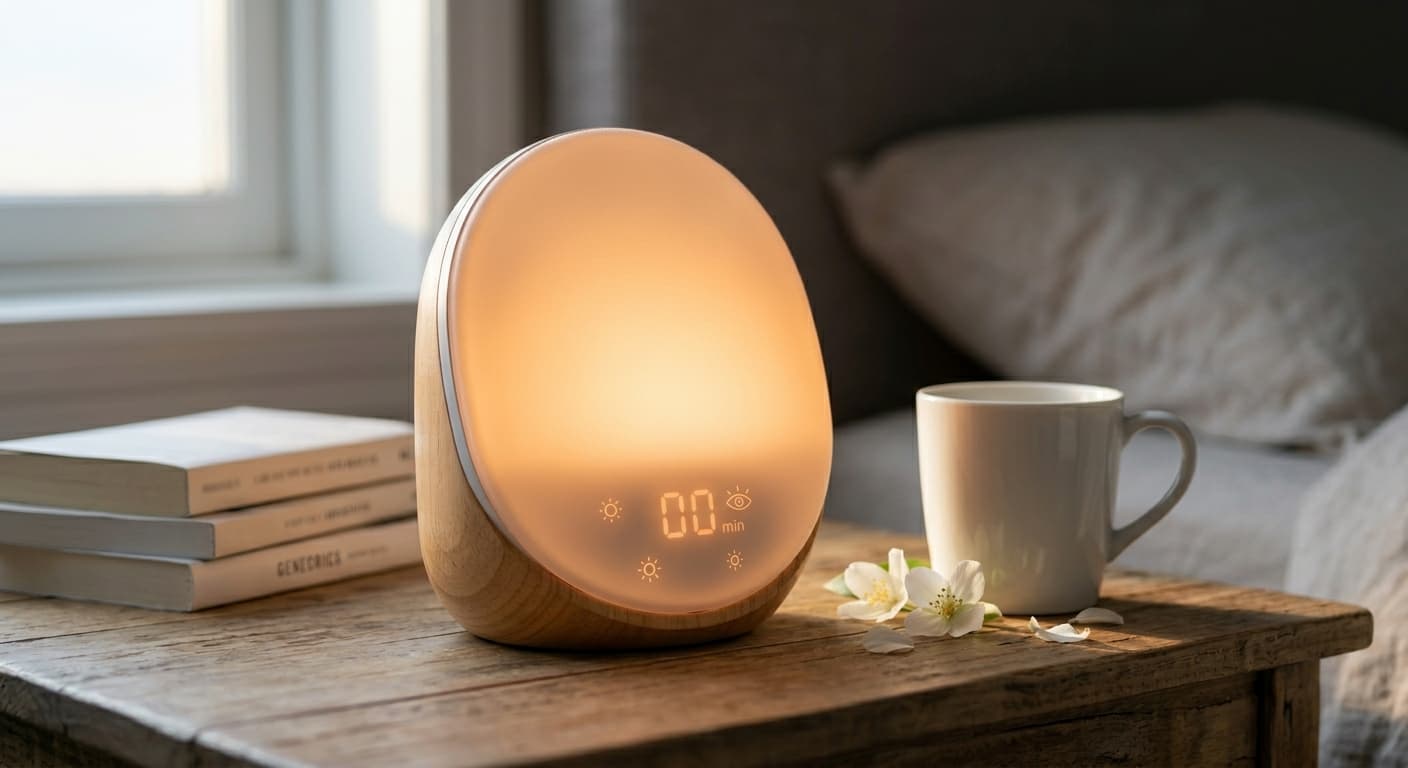
Price: $33 (regularly $53)
Colors: 7 (blue, indigo, purple, red, orange, yellow, green)
Alarm Sounds: 7 natural sounds
Sunrise Duration: Adjustable (10, 20, or 30 minutes)
Special Features: Dual alarms, FM radio, snooze, 20-level brightness
Power: Corded electric
Colors Available: White, Wood
Link: View on Amazon
At $33 - currently $20 below its regular price - this is the most accessible entry point into sunrise alarm clocks on this list. It covers every core feature you'd want: adjustable sunrise simulation (10, 20, or 30 minutes), 7 natural alarm sounds (bird song, sea wave, stream, wind chime, soft music, piano), dual alarms with weekday/weekend options, and 20 levels of brightness adjustment including a fully off setting so the display doesn't disturb your sleep.
The 7-color mood light functionality adds genuine nighttime utility - it works as a bedside lamp, night light, and reading light beyond its primary alarm function. The FM radio is a thoughtful addition for people who prefer waking to radio rather than nature sounds. The 16-level volume adjustment means you can set it loud enough for heavy sleepers or quiet enough for light ones without disturbing a partner.
For someone who has never used a sunrise alarm clock and wants to find out whether it makes a practical difference to their mornings and anxiety levels, this is the right starting point. The feature set is comprehensive enough that you won't feel you're missing anything, and the price is low enough that the experiment costs very little.
Pros
- Most affordable entry point on this list at $33 (currently 37% off regular price)
- Adjustable sunrise duration (10, 20, or 30 minutes) - customizable for your routine
- Dual alarms with everyday/weekday/weekend settings - practical for varied schedules
- 7 colors, 7 sounds, 16 volume levels, 20 brightness levels - comprehensive customization
- FM radio included - rare at this price point
- Functions as night light, mood light, and reading lamp
Cons
- No sound machine for sleep - sounds are alarm sounds only, not continuous sleep sounds
- Lux output not specified - may not reach the 200+ lux of premium clocks
- ABS plastic construction - functional but not premium-feeling
- No battery backup for settings if power goes out
Who it's for: Anyone trying a sunrise alarm clock for the first time, heavy sleepers who want a gentler wake-up without spending much, or families who want a dual-alarm clock for two different wake times.
2. REACHER Sound Machine Sunrise Alarm Clock
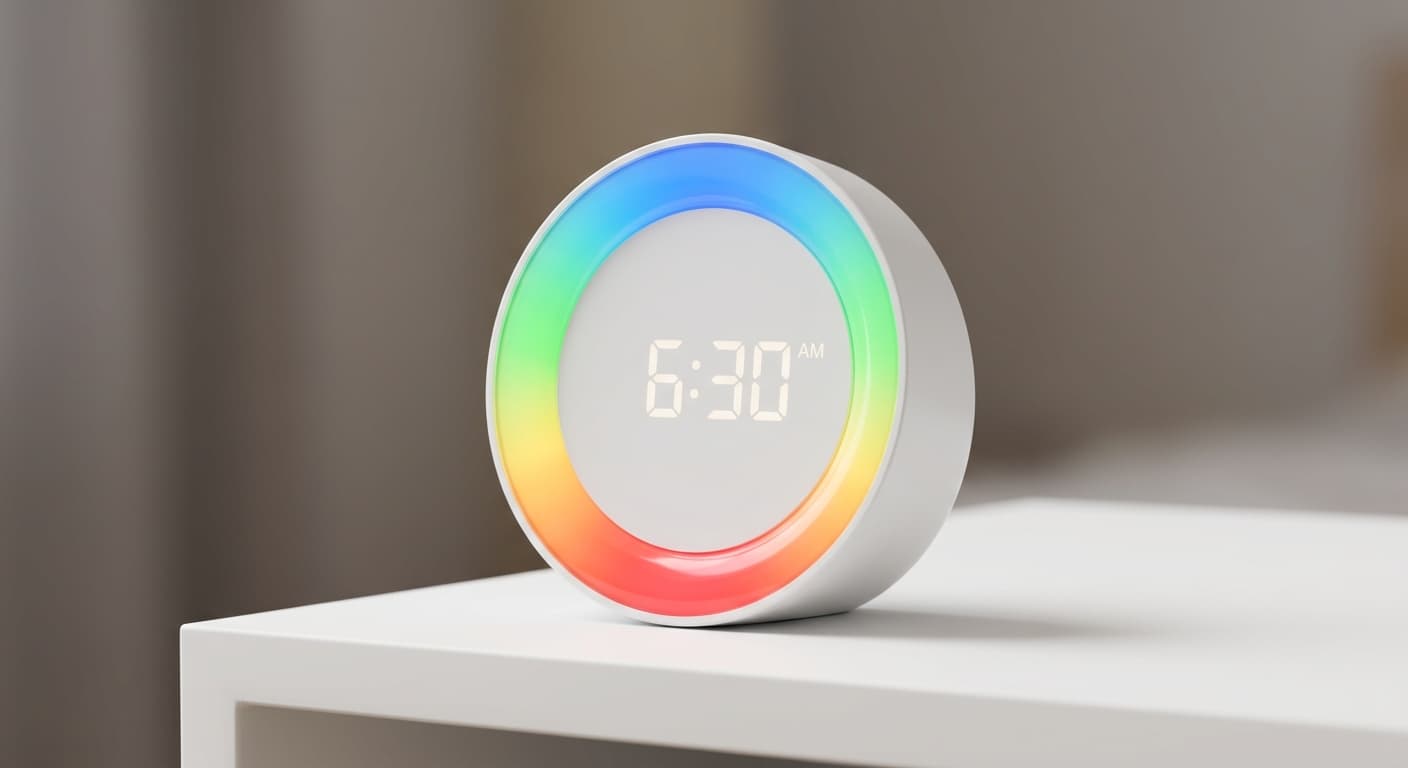
Price: $37 (regularly $50)
Colors Available: White, Wooden, Wooden Grain
Sounds: 26 sleep sounds (white noise, pink noise, brown noise, ocean, rain, wind)
Sunrise Duration: Adjustable
Special Features: 0-100% clock dimmer, 5-180 min sound timer, built-in battery backup
Power: Corded electric
Link: View on Amazon
Where the budget clock above has alarm sounds only, REACHER integrates a full sleep sound machine into the same device. Twenty-six sleep sounds - white noise, pink noise, brown noise, ocean waves, rain, wind - play continuously through the night to mask disruptive sounds and create a consistent sleep environment. The 5-180 minute timer automatically turns off the sound and nightlight at your set time, supporting a bedtime routine without having to remember to turn anything off manually.
The 0-100% clock display dimmer is a genuinely useful feature that most clocks in this price range don't offer. Complete display dimming means no light disruption while you sleep - a small thing that becomes significant for light-sensitive sleepers. The built-in battery backup preserves your alarm and settings during power outages, which solves the anxiety-inducing worry of sleeping through an important alarm after a power interruption.
The gentle orange sunrise light gradually increases before the alarm, the 8 alarm sounds allow morning customization, and the clearly labeled icon layout means setup and one-handed operation are straightforward. At $37 for a device that replaces both a sunrise alarm clock and a white noise machine, the value is genuinely hard to beat.
Pros
- 26 sleep sounds - full white noise machine functionality in one device
- 0-100% clock dimmer - complete display darkness for light-sensitive sleepers
- Built-in battery backup - alarm survives power outages
- 5-180 minute sound timer - auto-shutoff for bedtime routine
- Replaces two devices (alarm clock + sound machine) at a low price
- Available in wooden finish for more attractive bedside aesthetic
Cons
- 26 sounds, but no premium content like meditations or lullabies
- No app control or smart features
- Lux output not specified
- No FM radio
Who it's for: Anyone who wants both a sunrise alarm clock and a white noise machine without buying two separate devices, or anyone who sleeps in a noisy environment and needs sound masking as well as gentle wake-up light.
3. Dreamegg Sunrise 1
Price: $57 (regularly $100)
Material: Cotton-linen fabric
Colors: Dark Khaki, Navy Blue, Classic
Sizes: Two sizes (standard and larger)
Sounds: 29 (nature sounds, meditations, lullabies, white noise, brown noise, pink noise, fan)
Special Features: Phone-free setup, hand-sized for travel, 9 nightlight colors
Power: Battery powered
Link: View on Amazon
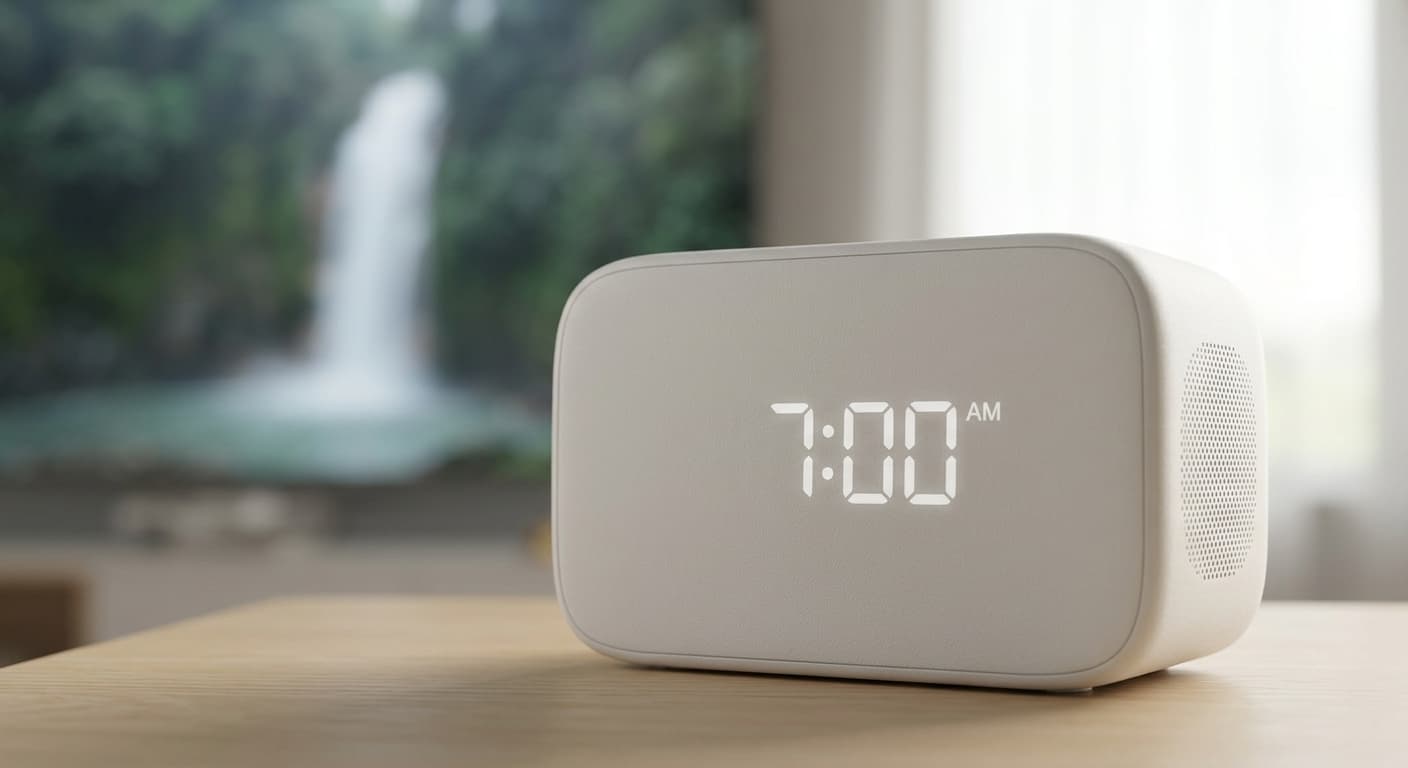
Dreamegg Sunrise 1 is the only clock on this list made from cotton-linen fabric - a material choice that makes it look like a considered home accessory rather than a piece of technology. On a bedside table next to your books and lamp, it fits in rather than standing out. This matters more than it sounds: a device you're proud to have on your nightstand is one you'll actually use consistently.
The 29-sound library is the deepest of any non-smart clock on this list, and crucially it includes meditations and lullabies alongside the standard white noise and nature sounds - making it genuinely useful for sleep anxiety and bedtime wind-down, not just background masking. The phone-free setup is a deliberate design decision: you configure everything directly on the device without connecting to Wi-Fi or an app, which means it actively supports keeping your phone out of the bedroom.
The hand-sized diameter makes it legitimately travel-friendly - it fits in a bag without taking up meaningful space, which is rare for sunrise alarm clocks. The battery-powered option means it works without being near an outlet. At $57 (currently 43% off regular price), it represents excellent value for a device that functions as a sunrise clock, sound machine, meditation player, nightlight, and travel companion simultaneously.
Pros
- Cotton-linen fabric construction - the most attractive design on this list by far
- 29 sounds including meditations and lullabies - broadest content of non-smart clocks
- Phone-free setup - actively encourages phone-free bedroom environment
- Hand-sized and battery-powered - genuinely travel-friendly
- 9 nightlight colors with independent brightness control
- Currently 43% off regular price
Cons
- No FM radio
- Two sizes available but size differences not clearly specified in listing
- Less customization than app-controlled options like Hatch
- Battery-powered means occasional battery replacement
Who it's for: Design-conscious users who want a bedside device that looks intentional rather than functional, frequent travelers who want consistent sleep routines away from home, or anyone who wants a phone-free bedroom setup with broad sound content.
4. Philips SmartSleep Wake-Up Light
Price: $76 (regularly $109)
Color: White
Sounds: 5 natural wake-up sounds
Special Features: Sunset simulation, FM radio, tap snooze, 20 brightness settings
Clinically: Recommended by physicians and pharmacists
Link: View on Amazon
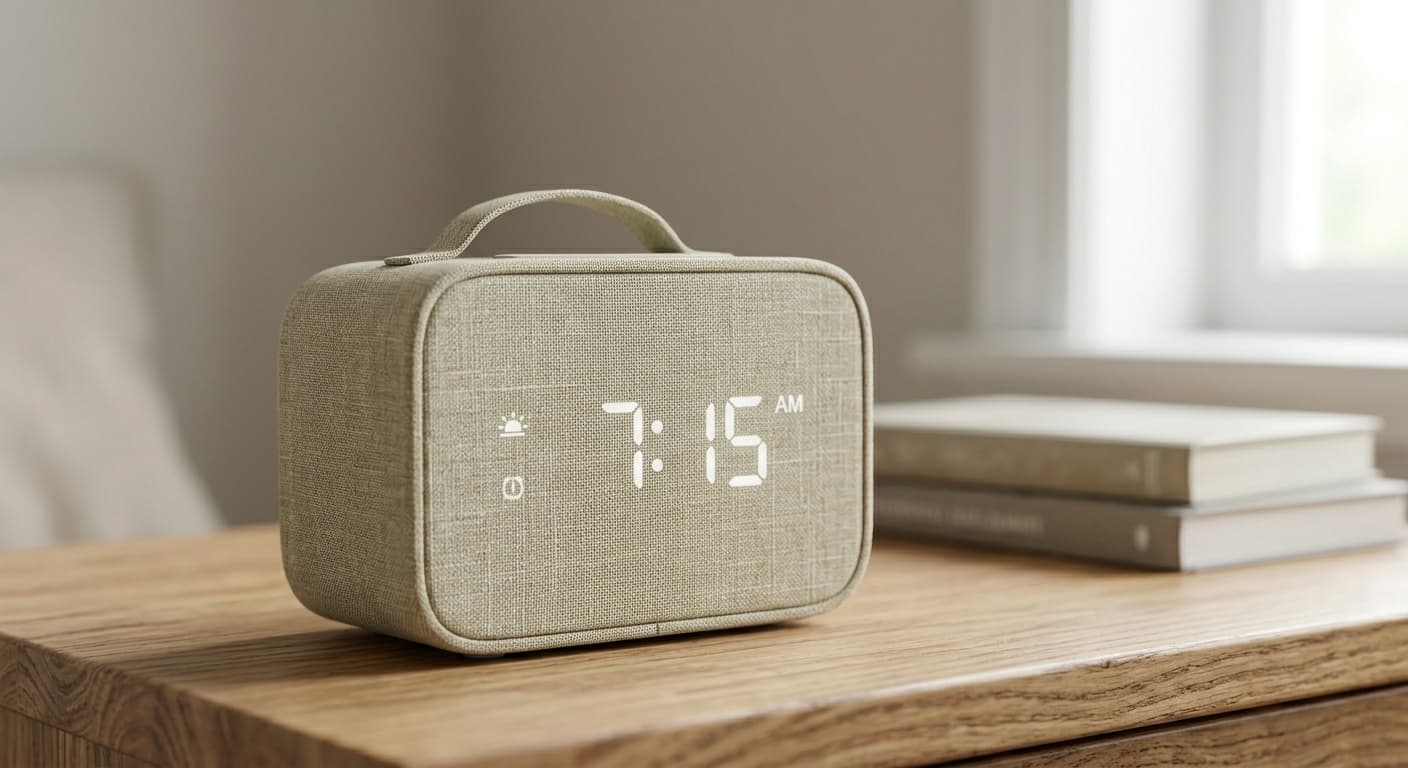
Philips SmartSleep is the only sunrise alarm clock on this list that carries physician and pharmacist recommendations for establishing healthy sleep and wake routines. That clinical credibility reflects what distinguishes it from budget alternatives: the Philips is specifically engineered to reach the light intensity needed to reliably trigger the cortisol awakening response - the biological wake-up mechanism that makes sunrise simulation effective - rather than simply brightening gradually and hoping for the best.
The sunset simulation feature is an addition none of the other clocks on this list offer. In the evening, you can activate a gradual dimming mode that simulates a sunset over 30 minutes - a falling light signal that tells your body night is coming and melatonin production should begin. This bookends your day with light therapy at both ends: a sunset wind-down and a sunrise wake-up. For managing circadian rhythm, anxiety, and sleep quality together, this dual approach is more complete than wake-up only.
The tap snooze is a practical detail - you tap anywhere on the top of the device rather than fumbling for a button while half-asleep. The automatic dimmable display means the clock face adjusts to ambient light and doesn't disturb sleep. At $76 (currently 30% off), this is the most evidence-backed option on this list for the specific use case of sleep improvement and anxiety reduction through circadian rhythm alignment.
Pros
- Clinically proven, recommended by physicians and pharmacists - strongest credibility claim on this list
- Sunset simulation in addition to sunrise - the only clock here with both
- Engineered light intensity to reliably trigger the cortisol awakening response
- FM radio and 5 natural wake-up sounds
- Tap snooze - intuitive operation when half-asleep
- 20 brightness settings for reading lamp use
- Currently 30% off regular price
Cons
- Only 5 alarm sounds - fewest of any clock on this list
- No sleep sound machine - lights only, no continuous nighttime sounds
- No app control or smart features
- White only - no color or material options
Who it's for: Anyone who wants the most clinically credible sunrise alarm clock, people who want both sunrise wake-up and sunset wind-down light therapy, or anyone who's tried cheaper sunrise clocks and wants to know if a properly engineered one makes a difference.
5. LittleHippo Mella
Price: $50
Colors: Arctic Blue, Pink, Purple, White
Sounds: 3 sleep sounds, 3 alarm sounds
Special Features: Color-based sleep/wake signals, facial expressions, countdown timer
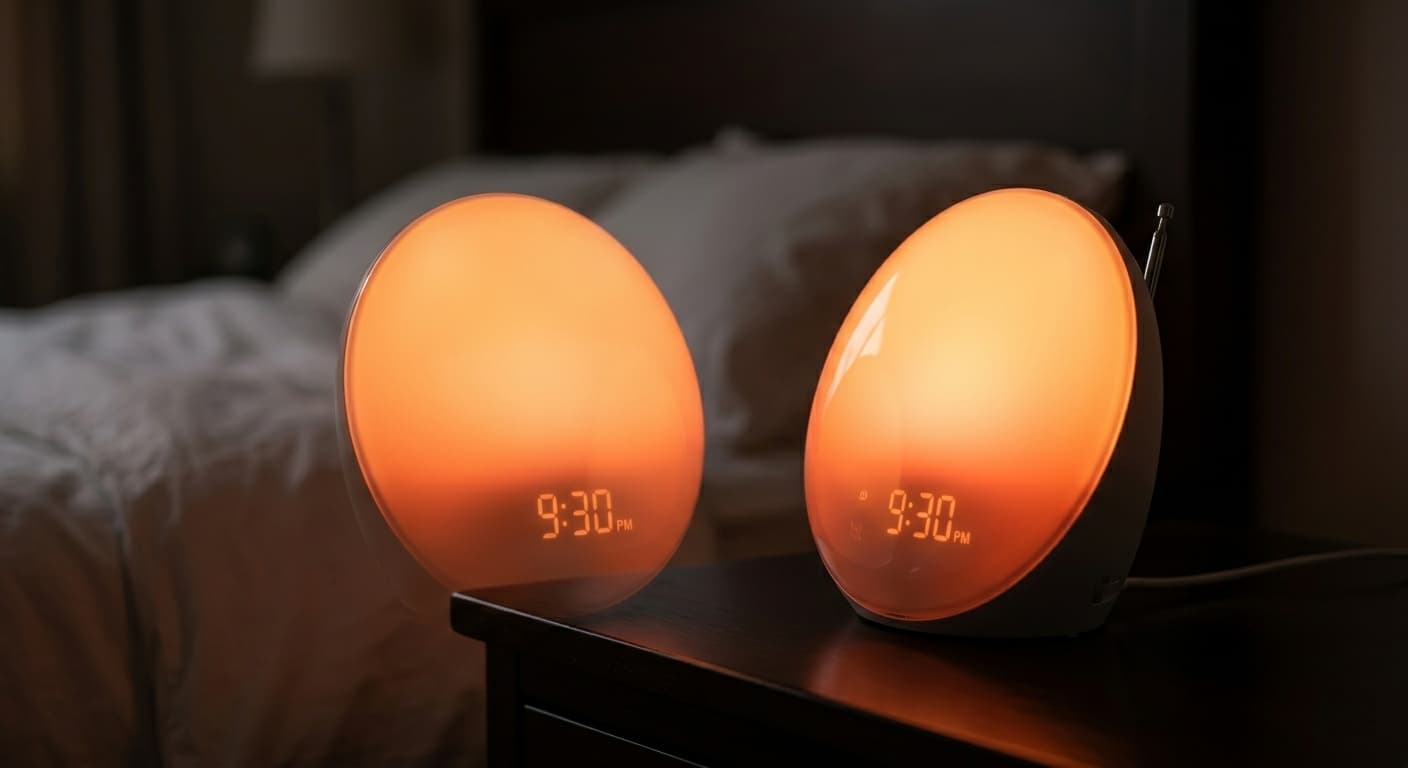
An important distinction before anything else: Mella is not a traditional sunrise alarm clock with gradual light brightening. It's a children's sleep trainer that uses color signals and facial expressions to teach toddlers when it's time to sleep and when it's okay to wake up. Half an hour before wake time it glows yellow (almost time). When it turns green, it's time to get up. At bedtime it glows in one of five nightlight colors to soothe the child to sleep.
This is included in this list because it solves a specific and underserved problem: parents of toddlers who wake too early and need a visual signal their child can understand without being able to read a clock. The system teaches children to stay in bed until the green light - which means more sleep for the child and for the parents. For families managing a toddler's sleep routine, this is more directly useful than any traditional sunrise clock.
The construction reflects the target user - child-safe ABS and silicone, multiple safety certifications, and a durable design that handles the inevitable drops and handling that children's products endure. The 100% satisfaction guarantee reflects the brand's confidence in a product that has been featured in publications for its design and functionality.
Pros
- Color and expression system teaches toddlers sleep/wake boundaries without words
- Five nightlight colors for bedtime soothing
- Three sleep sounds for settling at bedtime
- Countdown timer for timed activities - grows with older children
- Child-safe materials with extensive safety certifications
- Durable construction designed for child use
Cons
- Not a true sunrise simulation clock - uses color signals, not gradual light brightening
- Very limited sound options (3 sounds) compared to adult clocks on this list
- Only useful for the toddler/young child stage - not a long-term family investment
- Must be plugged in - cord management required in a child's room
Who it's for: Parents of toddlers aged approximately 2-5 who wake too early and need a visual sleep/wake signal their child can understand and follow. Not a traditional sunrise clock - a sleep training tool for the specific challenges of early childhood sleep.
6. Hatch Restore 3 Sleep System
Price: $170
Colors: Cocoa, Greige, Latte, Putty, Slate
Sounds: 80+ science-backed sleep sounds
Special Features: Sunrise alarm, sunset wind-down, app control, customizable routines, Hatch+ content library
Connectivity: 2.4GHz Wi-Fi + Bluetooth
Subscription: Hatch+ at $4.99/month after 30-day trial
Link: View on Amazon
Important before anything else: Hatch Restore 3 requires a $4.99/month (or $49.99/year) Hatch+ subscription after a 30-day free trial to access the full content library - meditations, sound baths, sleep podcasts, audiobooks, and curated bedtime routines. The hardware works without the subscription, but the content that makes this product exceptional is subscription-gated. Factor this into your budget: $170 upfront plus approximately $50/year ongoing.
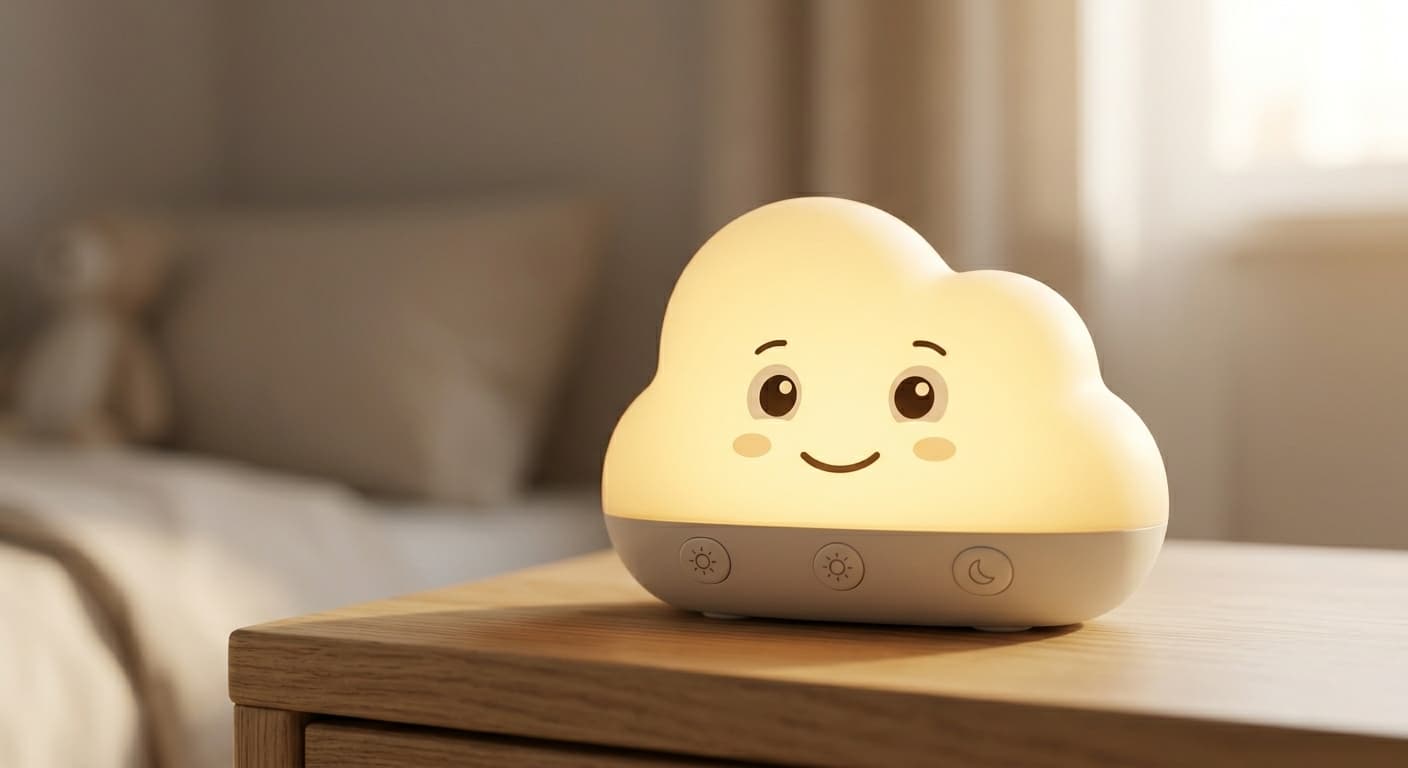
With that clearly stated - Hatch Restore 3 is in a different category from everything else on this list. It's not just an alarm clock. It's a complete sleep system that handles your entire relationship with your bedroom from wind-down to wake-up. The app lets you create personalized routines pairing specific light colors and intensities with specific sounds or content - a meditation with warm amber light for winding down, a gradual sunrise with birdsong for waking up - and those routines can evolve as your sleep needs change.
The 80+ sleep sounds include options - like sound baths, sleep meditations, and curated audiobooks - that no other clock on this list can offer. The single large button design means sleepy hands can snooze, adjust volume, and start routines without fiddling with small controls in the dark. The one-time bedroom setup approach specifically supports reducing phone use in the bedroom: once your routines are programmed, you don't need your phone to activate them.
For people whose anxiety significantly disrupts sleep - who need both a carefully managed wind-down and a gentle wake-up, and who want a growing library of sleep content rather than a fixed set of sounds - Hatch Restore 3 is the most complete solution available at this price point.
Pros
- The most complete sleep system on this list - handles wind-down, sleep environment, and wake-up
- 80+ sleep sounds including meditations, sound baths, and audiobooks
- Fully customizable routines via app - light + audio pairings for every part of your routine
- Sunrise alarm and sunset wind-down both included
- Multiple color options - the most aesthetically varied premium option
- Reduces phone dependence once routines are set up
- 30-day free Hatch+ trial included with purchase
Cons
- $170 is the highest price on this list - significant investment
- Requires Hatch+ subscription ($4.99/month) for full content - ongoing cost
- Requires Wi-Fi and Bluetooth for setup and ongoing use
- App dependency means technical issues can disrupt your sleep routine
- Not appropriate for people who want a simple, tech-free bedroom device
Who it's for: Serious sleep optimizers whose anxiety significantly affects sleep quality, people who want a growing library of curated sleep content beyond fixed sound libraries, or anyone who has tried simpler sunrise clocks and wants a more comprehensive system.
How to Choose the Right Sunrise Alarm Clock for You
If you've never used one and want to try it affordably: Generic Wake Up Light ($33) - comprehensive features at the lowest price.
If you want both a sunrise clock and a white noise machine: REACHER ($37) - replaces two devices at a price lower than most standalone options.
If design matters and you travel frequently: Dreamegg Sunrise 1 ($57) - the most attractive clock on this list, genuinely portable.
If clinical credibility is your priority: Philips SmartSleep ($76) - physician-recommended with the only sunset simulation on this list.
If you have a toddler who wakes too early: LittleHippo Mella ($50) - not a sunrise clock, but the right sleep tool for this specific problem.
If you want the most complete sleep system available: Hatch Restore 3 ($170) - budget for the subscription, get the full experience.
Do You Need a Sound Machine Too?
If you sleep in a quiet environment: a sunrise-only clock (Generic Wake Up Light, Philips SmartSleep) is sufficient.
If you sleep in a noisy environment, have a partner who snores, or find silence anxiety-inducing at bedtime: choose one with an integrated sound machine (REACHER, Dreamegg, Hatch Restore 3). Having both functions in one device is simpler and cheaper than buying separately.
Sunrise Duration: How Long Should It Be?
Thirty minutes is the gold standard - it gives your body the most natural transition. Twenty minutes is adequate for most people. Ten minutes compresses the experience enough that the difference from a regular alarm is reduced, though still better than an instantaneous alarm. Choose a clock with adjustable duration so you can experiment with what works for your sleep patterns.
The Science of Light and Circadian Rhythm
Sunrise alarm clocks have stronger scientific support than any other product in this series - and it's worth understanding why.
Your circadian rhythm - the roughly 24-hour internal clock that governs your sleep-wake cycle, hormone production, body temperature, and dozens of other biological processes - is primarily set by light. Specifically, by the spectrum and intensity of light your retinas receive at different times of day. This is not a recent discovery or a wellness trend. It is fundamental, well-replicated biology that has been understood for decades.
The cortisol awakening response is the mechanism that makes sunrise alarm clocks effective. In the 30-45 minutes before natural waking, your body naturally begins releasing cortisol - not in the stress-response way, but in the healthy, alertness-promoting way that prepares you for the day. This response is triggered and amplified by light. A sunrise alarm clock that reaches adequate brightness (200+ lux) in the 30 minutes before your alarm activates this response earlier and more strongly, so you surface from sleep more naturally.
Sleep inertia - the groggy, disoriented feeling after a jarring alarm - is caused by being woken suddenly from deep sleep. The cortisol awakening response reduces sleep inertia by moving you into lighter sleep stages before the alarm sounds. Multiple studies have shown that people woken by gradual light report lower sleep inertia, better mood, and higher energy in the first hour of the day compared to those woken by sound alarms alone.
For anxiety specifically: the jarring cortisol spike from a traditional alarm is indistinguishable to your nervous system from a threat response. Starting your day with a threat response primes your nervous system for anxiety throughout the morning. Starting your day with a natural cortisol awakening response does the opposite - it signals safety and readiness rather than threat.
FAQ
Do sunrise alarm clocks work through closed eyelids?
Yes. Closed eyelids are not opaque - they transmit a meaningful amount of light to your retinas, particularly as intensity increases. The biological response to light doesn't require your eyes to be open. This is why the gradual brightening works even while you're still asleep.
Do I still need the alarm sound or will the light wake me up?
Most people find the light alone wakes them before the alarm sounds after a few weeks of use, once their body has adapted to expecting the sunrise signal. Initially, keep the alarm sound enabled as a backup. Over time, many users find they wake naturally with the light and the sound becomes unnecessary.
Will it wake my partner too?
Yes - sunrise simulation brightens the room, which affects anyone sleeping in it. If you and your partner have different wake times, the earlier riser's sunrise simulation will likely disturb the other. Solutions include positioning the clock on the earlier riser's side of the bed, using a lower maximum brightness setting, or choosing a clock with a directional light design.
What's the difference between a sunrise alarm clock and a regular light therapy lamp?
A light therapy lamp (sometimes called a SAD lamp) delivers high-intensity light (typically 10,000 lux) for a fixed session while you're awake, used to treat Seasonal Affective Disorder and regulate circadian rhythm. A sunrise alarm clock delivers gradually increasing lower-intensity light while you sleep, timed to your alarm. Both work through light's effect on circadian rhythm but serve different purposes and are used differently.
Can I use it to help with Seasonal Affective Disorder (SAD)?
Sunrise alarm clocks are not a replacement for a proper SAD lamp (10,000 lux). However, they do provide morning light exposure that supports circadian rhythm regulation, which is part of managing SAD. If SAD is a significant concern, use both - a sunrise clock for waking and a proper light therapy lamp for a 20-30 minute morning session while awake.
How long until I notice a difference?
Most people notice a difference in how they feel upon waking within the first week - less groggy, less jarred, more ready for the day. For cumulative benefits like improved overall sleep quality and reduced morning anxiety, most users report meaningful changes within 2-4 weeks of consistent use.
Is it safe to use every night?
Yes. Sunrise alarm clocks are passive devices that work with your body's natural biology. There are no known adverse effects from nightly use. The goal is to use them consistently enough that your body adapts to the light signal as a reliable wake cue.
Final Verdict
For most people, the Generic Wake Up Light at $33 is the right starting point. It covers every core feature at a price that makes the experiment cost almost nothing. Use it consistently for two weeks and you'll know quickly whether waking up to gradual light changes how your mornings and anxiety levels feel.
If you want one device that handles both your sleep environment and your wake-up, REACHER at $37 is the smarter purchase - 26 sleep sounds plus a sunrise clock for essentially the same price.
For clinical credibility and the added benefit of sunset simulation for your evening wind-down, Philips SmartSleep at $76 is the step up that most clearly earns its higher price through evidence-backed performance.
And if you take your sleep seriously, experience significant anxiety, and want a complete system rather than a single tool, Hatch Restore 3 is worth both the $170 upfront and the ongoing subscription cost. Budget the subscription in from the start and it's the most comprehensive sleep investment on this list.
Give whichever you choose at least two weeks of consistent use. The first morning shows you it's different. Two weeks shows you what different mornings do to the rest of your day.
Reflections & Thoughts
No thoughts shared yet. Be the first to join the conversation.